

CLASS DEFINITION
See also: Clinical Programs
Classes can be taken on-location or through on-line/distance learning.
See our Blog for current class dates
Acupressure
Oriental Acupressure is a natural healing modality in which light to moderate pressure is applied to acupuncture points with the thumb, fingertips, palms, forearms and elbows. Acupressure helps balance the energies along the Oriental meridian systems.
ACU Level 1
Learn the principles and theory of Traditional Chinese Medicine and the 12 major meridians, theory and palpation techniques. Learn how to use the hara analysis to determine imbalances of energy.
ACU Level 2
Learn the Traditional Chinese Medicine Eight Principles and how to use them to create an Acupressure treatment protocol for a client.
ACU Level 3
Learn how to use aromatherapy and pressure points for specific ailments and more palpation techniques.
ACU Level 4
This class is designed for the practitioner to complete the clinical requirement for certification. Students will perform techniques under instructor’s supervision thru an online classroom setting.
Basic Certification requires levels 1 and 4. Advanced Certification requires all four levels.
Required text: The Essential Step-by-Step Guide to Acupressure with Aromatherapy, Relief for 64 Common Health Conditions
Acupressure Class for Couples
Acupressure is a natural healing modality in which light to moderate pressure is applied to acupuncture points with the thumb, fingertips, palms, forearms and elbows. Acupressure helps balance the energies along the meridian systems.
In this acupressure class for couples certified and licensed practitioners teach couples acupressure techniques that can assist with reducing pain and discomfort as well as reduce stress. Under the tutelage of the teacher partners will settle into a 1 and ½ hour crash course covering acupressure techniques in a small group of like-minded pairs. Make tension disappear with knowledge of meridian systems. Students spend the first 30 minutes ingesting information as a group before putting their lessons into practice during a 1 hour of hands-on demonstration. Instructors work with the couples to guide them through the finer points of acupressure techniques in a relaxed carefree way.
Contact Hours: 1 ½ hours
Aromatherapy Program Basic & Advanced
 Watch Areomatherapy Classes Video
Basic Aromatherapy Program Includes Level 1 and 2
To receive Advanced Aromatherapy Certification all four levels must be completed.
Aromatherapy Level I
Essential oils have been used for hundreds of years for ritual, perfume and therapeutic purposes. This class will cover the history, philosophy, benefits, therapeutic use and body system affinity of the most commonly used essential oils. Information on safety, how to choose a source for essential oils and application techniques.
Aromatherapy Level II
Students will learn Vitaflex and Raindrop Techniques by Gary Young, including 2 hours of practical. Discuss benefits, physical and emotional actions of essential oils chosen for raindrop.
Aromatherapy III
Acupressure and Lymphatic drainage with essential oils
Students will learn how to choose oils for lymphatic drainage and conditions where acupressure can be a benefit. Practical will include using acupoints with essential oils and lymphatic drainage.
Aromatherapy Level IV
Making essential oil products.
Students will make products using essential oils and other natural substances such as bath salts, lip balms, insect repellant, skin balm, headache/pain relief salve and more.
**American Naturopathic Holistic Association is a peer reviewed organization for professional health care practitioners and natural health care training institutions.
Body Wrap Training
Learn the Body Wrap process, diet and sanitation process in this three-day class. Thirty practice hours are recommended in the proper development of the technique.
Contact Hours: 12
Practice Hours: 30
Introduction to Crystal Chakra Balancing
“Grounding” refers to the efficient flow of our Life Force moving thru the Chakras.
Learn about the Chakra System and how to balance this primary energy system of the body at an introductory level. The student will learn how to evaluate when the Chakra System is not operating efficiently. When Life Force is restricted it causes harm in each of the body’s systems, mental and physical. More and more imbalances are being traced back to this. The costs to our bodies is evidenced in all stress related diseases, mental confusion and just the feelings of being overwhelmed that many of us experience.
When the Chakra System is aligned and cleared symptoms can be greatly reduced as a result they become much more manageable by other healing modalities.
Chinese Medicinal Herbs, Level 1 and 2
Learn the principles and promises of Chinese Herbal Medicine. Qi and the four vital bodily humors, yin and yang, the five elements, meridians and causes of disease in relation to the most widely used Chinese herbs will be discussed.
Contact Hours: 10
Feng Shui Level 1
Learn the way to use a bagua to create balance and harmony in any space. Understand how chi flows and how it affects you and your surroundings. Learn how clutter affects health and energy flow.
Level 1: Contact Hours: 8
Practice Hours/Case Study: 5
Homework Hours: 2
Feng Shui Level 2
Learn to personalize feng shui by using charting system. Learn how to use feng shui to promote health and prevent problematic areas in life.
Level 2: Contact Hours: 8
Practice Hours/Case Study: 5
Homework Hours: 2
Master Herbalist Program
Objectives:
Herbal formulas are readily available to anyone who may be taking a pharmaceutical drug. In order to help these patients navigate the complex realm of complementary and alternative medicine, this certification course is designed to familiarize the student with the philosophy, history and principles of traditional herbal medicine. The student will learn about herbs that relate to each body system and understand the holistic approach to herbal medicine.
- Identify primary herbs for each body system.
- Discuss the role of secondary and catalysts herbs in a holistic formula.
- Discuss the principles of compounding herbs.
- Describe herbal detoxification and its benefits.
- Discuss how to safely use herbal medicine.
- Discuss therapeutic dose.
- Discuss the holistic approach to the use of traditional herbal medicine.
- Discuss the principles of Traditional Chinese Medicine
- Discuss the principles of Ayurvedic Medicine
- Perform Hara Analysis and Tongue Analysis.
- Discuss phytochemistry of tonic herbs.
- Discuss phytochemistry of specific herbs.
- Identify medicinal plants.
- Discuss growing medicinal plants.
- Discuss preparations of herbal medicines.
- Prepare infusions, decoctions, ointments and other herbal preparations.
- Discuss contraindications of herbs, vitamins, supplements and pharmaceuticals.
- Discuss setting up a practice or business
- Discuss case studies and do five consultations
Program Outline
MHC1 Herbal Medicine Level 1: System Affinity/Terminology:
History and philosophy of Western Herbal medicine, medical, herbal and botanical terminology.
Herbal sources and formulations
How to use herbal medicine safely
Benefits of compounding herbs
Holistic approach and Constitutional herbalism
Treating body systems-Respiratory system, Urinary system, Musculo-skeletal system,
Skin, hair and nails, Eyes and ears health
Completion of Holistic Health Care 3- exempt from this level
MHC2 Herbal Medicine Level 2: Treating Body Systems and Detoxification
y systems – Nervous system, Respiratory system
Food protocol to use when on a cleanse
Treating body systems – Digestive system, Circulatory system,
Treating bod
In-depth study of detoxification to rid the body of pollutants.
Detoxification protocol for candida albicans and other parasites
Completion of Holistic Health Care 2- exempt from this level
MHC3 Herbal Medicine Level 3: Introduction to Eastern and Ayurvedic Herbal Medicine
Principles of Traditional Chinese Medicine
Principles of Traditional Chinese Medicine,Tongue analysis and Hara analysis
Principles of Ayurvedic Medicine, the traditional medical system of India.
MHC4 Herbal Medicine Level 4: Phytochemistry/Research:
Herbal phyto-chemistry of several most popular specific herbs
Herbal phyto-chemistry of tonic nervines.
Herbal treatments for diabetes, and arthritis
Herbal treatments for cancer, nervous disorders and digestive disorders.
MHC5 Herbal Medicine Level 5: Plant Identification/Harvesting:
A detailed study of botany in relation to herbal medicine. Plant anatomy, identifying,
cultivating and harvesting herbs.
Students will learn how to make their own herbal remedies, including healing balms, lotions, teas, syrups, oils, tinctures, and more.
Discuss the entire process of preparing herbal medicines at home.
Discuss methods of growing, gathering, and drying herbs, to different ways of extracting their vital essences. Students will be expected to send in a sample of a homemade remedy during their final grading.
MHC6 Herbal Medicine Level 6: Vitamin/Drug/Herb Interaction
Students will learn how to avoid making mistakes when using natural supplements and common
medications together.
Drugs that deplete the body’s essential nutrients
Herbs that help prescriptions work better, or reduce drug side effects.
Herb and drug contraindications.
MHC7 Herbal Medicine Level 7: Business Procedures Jurisprudence
Students will learn how to set up their own practice and how to avoid legal complications. Standard disclaimer forms will be presented, which should be used while practicing any aspect of herbal medicine.
HNC2 Nutrition Level 2: Principles of Nutrition
Learn the nutritional needs of the human body which includes macro and micro nutrients,
enzymes and antioxidants.
HNC3 Nutrition Level 3: Nutrition & Body Chemistry
The student will learn the effect of the twenty-one chemical elements on colon health, how soft tissue is built, the importance of electrolytes and the importance of bone
builders and blood builders.
Program Requirements
“Master Herbalist” certification is comprised of 9 Levels, which includes Nutrition Level 2 and 3.
Each Level is 6 contact hours plus 2 to 4 hours of homework
The student will receive a certification after the completion of all 9 levels, and completion of the ANHA take-home exam
Books Required for Master Herbalist Program
MHC1 - Medical Herbalism by David Hoffmann
MHC2 - Medical Herbalism by David Hoffmann, Healthy Healing by Linda Page
MHC3 - Medical Herbalism by David Hoffmann, Planetary Herbology by Michael Tierra
MHC4 - Medical Herbalism by David Hoffmann, Healthy Healing by Linda Page, The Herbal Medicine – Maker’s Handbook by Green
MHC5 - Medical Herbalism by David Hoffmann, Healthy Healing by Linda Page
MHC6 - Medical Herbalism by David Hoffmann, Healthy Healing by Linda Page
MHC7 - Business Mastery by Sohnen-Moe
HNC2 - Prescription for Nutritional Healing - Fifth Edition - by Phyllis Balch, Diet and Nutrition – by Rudolph Ballentine
HNC3 - Guide to Body Chemistry and Nutrition – by Bernard Jensen
Suggested but not required
How to be your own Herbal Pharmacist by Linda Rector Page
Prescription for Herbal Healing by Phyllis Balch
Holistic Health Care
These Holistic Health Care classes are a broad overview of Natural Medicines and therapies.
This program is designed to prepare the student in the following skills:
Analysis:
-
Traditional Chinese Observations
-
Iridology
-
Japanese Hara Study
Natural Treatment:
-
Herbal Medicine
-
Food as Medicine
-
Homeopathy
-
Supplements
-
Essential oils
The program also includes the study of ailments, which helps the student understand symptoms and how to use holistic methods of treatment.
Level 1: Anatomy and Physiology, and Medical Terminology.
This level familiarizes the student with each system of the human physiology and introduces the world of medical terminology. This level will help the student understand the client's description of symptoms and understand physician's diagnosis.
Contact Hours: 7
Homework Hours: 6
Level 2: Detoxification and Pathology of Disease
Learn the holistic or naturopathic perspective of disease. Learn the importance of detoxification and various detoxification protocols.
Contact Hours: 7
Homework Hours: 6
Level 3: Aromatherapy and Herbal Medicine
The student will learn how to use essential oils and herbal remedies safely.
Ailments of the Digestive system, Circulatory system and Respiratory system will be discussed.
Contact Hours: 7
Homework Hours: 6
Level 4: Energy Medicine and Homeopathy
The student will learn how to use the electromagnetic power of the body, and how to use Homeopathic remedies for acute and chronic ailments. Ailments of the Nervous system, Reproductive system and Urinary system will be discussed.
Contact Hours: 7
Homework Hours: 6
Level 5: Iridology and Japanese Hara Analysis
The student will learn the analysis of the iris and how it relates to the human anatomy. The Hara Analysis is a tool used to determine the present status of each energy center. Ailments related to the Immune system will be discussed.
Contact Hours: 7
Homework Hours: 6
Level 6: Traditional Chinese Medicine
The student will learn the philosophy and principles of TCM and will also learn the 12 major Meridians and their symptoms when out of balance.
Contact Hours: 7
Homework Hours: 6
Level 7: TCM Observations - Tongue & Pulse Analysis
The student will learn how to interpret the appearance of the tongue in relation to various organs and how to feel for the pulse to determine the status of the client's health.
Contact Hours: 7
Homework Hours: 6
Level 8: Treatment of Ailments - Beginning Clinical Rotation - 3 cases
The student will interview the client, perform observations (Hara, Face & Tongue) test remedies and make recommendations.
Contact hours: 7
Level 9: Treatment of Ailments - Intermediate Clinical Rotation - 3 cases
The student will interview the client, perform observations (Iridology, Hara, Face & Tongue) test remedies and make recommendations.
Contact hours: 7
Level 10: Treatment of Ailments - Advanced Clinical Rotation - 4 cases
The student will interview the client, perform observations(Pulse, Iridology, Hara, Face & Tongue) test remedies and make recommendations.
Contact hours: 7
The student must complete ten levels. Each level is an independent module; therefore, the student may take them out of sequence except for Level VIII to X (clinical). After the completion of the program a student can sit for an exam with the American Naturopathic and Holistic Association. This course is a pre-requisite for our Naturopathy program, which is approved by the State of Maryland.
Holistic Laboratory Technology
Prep for Federal Certification
Prerequisite: Anatomy and Physiology:
Holistic Health Care Level I or Holistic Nutrition Level I
Level I
This course will teach the proper procedures of the CLIA (Clinical Laboratory Improvement Amendment) waived laboratory tests approved by the Federal Government. Pathologies related to the Urinary system and cardiovascular system.
Upon completion of this course the practitioner will be able to use test kits to determine the presence of various substances in the client’s system, cholesterol, ph balance, protein, leukocytes and ketones.
The student will learn how to interpret the results of the test and learn the various remedies and food to recommend in order to assist the client back to a balanced and healthy system.
Contact Hours: 8
Homework Hours: 2
Level II
Pathologies related to the Endocrine system and Reproductive system will be discussed. This course is an advanced level of laboratory testing that will teach the The student will learn how to interpret the results of the test and learn the various remedies and food to recommend in order to assist the client back to a balanced and healthy system.
The following tests will be demonstrated: Tests for hormones, Pregnancy test, Fertility test, STD tests
Contact Hours: 8
Homework Hours: 2
Level III
Pathologies related to the Immune/Lymphatic System will be discussed. CLIA tests for infections, mononucleosis, lyme disease, HIV, carcinoma and nonspecific screening test for inflammatory activity, will be demonstrated. The student will learn how to interpret the results of the test and learn the various remedies and food to recommend in order to assist the client back to a balanced and healthy system.
Contact Hours: 8
Homework Hours: 2
Level IV
Pathologies related to the Respiratory System and Digestive System will be discussed. CLIA tests for allergies, qualitative detection of respiratory syncytial virus antigen, GAS infections, nutritional analysis and H. pylori.
The student will learn how to interpret the results of the test and learn the various remedies and food to recommend in order to assist the client back to a balanced and healthy system.
Contact Hours: 8
Homework Hours: 2
Level V
Screening test for the presence/detection of amphetamines, THC, cocaine metabolites, methamphetamines, barbiturates, morphine, opiates, oxycodone and PCP in urine.
The student will learn the proper protocol for collection of specimens.
Contact Hours: 8
Homework Hours: 2
Prerequisite/Required Course Certifications:
Holistic Health Care Level I to VII
Holistic Nutrition Levels I to IV
(Holistic Health I and Holistic Nutrition I is Anatomy and Physiology, only one of these classes is required)
Written Exam
Holistic Nutrition
This Six Level course will prepare the student for Certification through the American Naturopathic and Holistic Association and the American Association of Nutritional Consultants.
Holistic Nutrition Level 1: Foundation of Nutrition
Anatomical, Physiological & Biochemical Processes of Nutrition
Learn the main functions of each body system, structure and biochemical processes.
Holistic Nutrition Level 2 - Principles of Nutrition
Learn the nutritional needs of the human body which includes macro and micro nutrients and enzymes.
Holistic Nutrition Level 3 - Nutrition and Body Chemistry
Learn the effect of the twenty-one chemical elements on colon health, how soft tissue is built, the importance of electrolytes and the importance of bone builders and blood builders.
Holistic Nutriton Level 4 - Fats and Sugars
Learn the truth about the different types of fats and sugars and how they affect our body.
Learn how to prepare highly nutritious food with fat and the right kind of carbohydrates.
Holistic Nutrition Level 5 - Meal Planning Guidelines
Learn dietary planning for optimal health for both adults and children and healing for chronic ailments.
Holistic Nutrition Level 6 - Counseling & Clinical
The student will be supervised by a Naturopath while working with clients.
Hand out recipes for clients to try.
Five clinical cases are required.
NOTE:
If you have taken Anatomy and Physiology, please submit a transcript or a certificate, to be exempt from taking Holistic Nutrition Level I.
Certification by ANHA** requires a written exam and levels I-VI.
Inner Harmony Training with Lightworker Certification
Are you ready for an upgrade in your spiritual life? Wondering how to enhance your intuition, or to connect with higher consciousness more fully? Inner Harmony Training with Lightworker Certification will teach you how to:
- Meditate – comprehensive program of visualizations, mantras, and more,
- enhance inner peace,
- develop intuition,
- manage your energies,
- protect yourself energetically,
- clarify your path of service as a Lightworker,
- and work with Higher Beings.
Light Worker Initiations are also offered for those who complete the coursework; initiation and certification are optional. This course is also the foundational required course for learning Harmony Healing and Harmony Coaching, all of which are certified through the Washington Institute of Natural Medicine’s accredited professional training program. The course includes:
-
Course includes:
- Subtle Energy Awareness Exercises
- Chakras and their relation to the evolution of Self
- Integration of Spiritual Worldviews in a Secular World
- Meditation instruction (Raja Yoga)
- Interfaith perspectives on Energy & Evolution of the Soul
- The Seven Rays of Creation, the Archangels and Masters of the Seven Rays, and how these can guide you on your path
- Light Worker Initiations (Blessings)
This course is Level One of the Harmony Professional Certification series offered jointly by Highest Harmony Healing & Coaching and the Washington Institute of Natural Medicine (WINM, whose courses are accredited).
Level One: 18-hour training
Level Two is Harmony Healing – 36-hour training
Level Three is Harmony Coaching – 36-hour training
Integrative Health Coach Program
Level 1: Anatomy and Physiology, and Medical Terminology.
This level familiarizes the student with each system of the human physiology and introduces the world of medical terminology. This level will help the student understand the client's description of symptoms and understand physician's diagnosis.
Level 2: Pathology of Disease
Learn the holistic or naturopathic perspective of disease. Learn the importance of detoxification and various detoxification protocols.
Level 3: Aromatherapy
Learn how to use essential oil safely and herbal remedies for all the body systems.
Level 4: Principles of Nutrition
Learn the nutritional needs of the human body which includes macro and micro nutrients, enzymes and antioxidants.
Learn the truth about the different types of fats and sugars and how they affect our body. Meal Planning Guidelines - Learn dietary planning for optimal health for both adults and children and healing for chronic ailments.
Level 6: Stress Management
Learn about visualization, meditation, guided imagery, energy work and aromatherapy for stress. The need for movement - Learn the best ways to incorporate movement to tone and strengthen he body at any age. Learn about the most optimum way to incorporate exercise in your daily life.
Level 7: Coaching Defined
Explains the keys to wellness, being centered, explains various coaching models. Individualizing wellness, lifestyle change, prescribe and treat, educate and implore advocate and inspire by using the four cornerstones of coaching.
Level 8: Wellness Coaching
Explains coaching people with health challenges, explains the foundation session, wellness assessment, co-creating a wellness plan, coaching for self-care and strategic lifestyle change.
Level 9: Coaching core competencies
Explains setting the foundation, establishing the coaching agreement, co-creating the relationship, communicating effectively, & facilitating learning and results.
Level 10: Herbal and Supplement interactions
Learn the safety of using supplements, herbs and essential oils with other medications. Business & Ethics - Learn the scope of your practice based on your profession and other certifications.
Level 11: Experiential Learning
Work with the instructor on how to work with a client. Submit 10 client cases.
List of Textbooks (All Paperbacks)
How the Body Works – by Editor – Dr. Peter Abrahams
Prescription for Nutritional Healing - Fifth Edition - by Phyllis Balch
Guide to Body Chemistry and Nutrition – by Bernard Jensen
Diet and Nutrition – by Rudolph Ballentine
The Naturopathic Way by Christopher Vasey, N.D.
Essential Oils Desk Reference, compiled by Essential Science Publishing
Prescription for Herbal Healing by Phyllis Balch
Tongue Diagnosis in Chinese Medicine by E. Maciocia
Suggested books:
Merck Manual
The Art of Aromatherapy by Robert B. Tisserand
Linda Page’s Healthy Healing
Planetary Herbology by Michael Tierra
Herbal Medicine: Trends & traditions by Charles Kane
Essential Reiki by Diane Stein
Hands of Light by Barbara Brennan
Frequently Asked Questions:
What are the minimum hardware/software requirements to complete this course?
Desktop or laptop computer with reliable internet access and a computer headset in order to join the live webinar sessions. Please note, mobile devices are not compatible with the webinar platform. (Adobeconnect)
The minimum system requirements to access and complete the online training modules are as follows:
- Internet Connection
- 0.5 Mbps (recommended 1+ Mbps), wired connection or Wi-Fi connection
- General Software
- Adobe Acrobat Reader/ Adobeconnect
- Windows Operating Systems
- 2.33GHz or faster x86-compatible processor, or Intel® AtomTM 1.6GHz or faster processor for netbooks
- Microsoft® Windows® XP (32 bit), Windows Server 2008 (32 bit), Windows Vista® (32 bit), Windows 7 (32 bit and 64 bit), Windows 8 (32 bit and 64 bit), or Windows Server 2012 (64 bit)
- Internet Explorer 8.0 or later, Mozilla Firefox 17 or later, Google Chrome, or Opera 11
- 512MB of RAM (1GB of RAM recommended for netbooks); 128MB of graphics memory
- Mac OS
- Intel CoreTM Duo 1.83GHz or faster processor
- Mac OS X v10.6, v10.7, v10.8, or v10.9
- Safari 5.0 or later, Mozilla Firefox 17, Google Chrome, or Opera 11
- 512MB of RAM; 128MB of graphics memory
- Chrome OS
- If you are using a Google device such as a Chromebook the device will display the course PDF documents with its internal software. Adobe Acrobat need not be installed on the system.
- Before beginning, please make sure you have done the following.
- Enabled JavaScript
- Disabled Pop-up Blocker
- Depending on your organization’s security settings you may need to make the learning center URL a Trusted Site
- Tablets and Smartphones
- Using iOS or Android operating systems are supported
Is there homework?
Homework is assigned for each level. These assignments are designed to enhance the instruction and include readings in your books as well as reflective writing exercises. You can expect to spend approximately 1 hour to 2 hours per level on the homework assignments.
Is there an examination?
Yes, there is a proctored exam thru Adobeconnect. In order to complete the course, receive a certificate of completion and earn continuing education credits you must pass the examination with 80% of the answers correct. You may take the examination as many times as needed during the examination period in order to pass.
Are continuing education credits available?
Yes. Awarded credits will vary based on your current professional status.
What kind of official documentation will I receive at the completion of the training?
After completing the course you will receive several downloadable electronic certificates from the Washington Institute of Natural Medicine.
Integrative Homeopathy Program
Level I: Homeopathic Principles and Philosophy
The student will learn the history, theories and principles of homeopathy as discussed by Samuel Hahnemann in his book “Organon of the Medical Art.”
Level II: Taking a Case
Interviewing the client is the most important aspect of helping the client and determining the best remedies to recommend. The student will learn how to ask for descriptions of symptoms. Learn how all senses can be useful in determining the remedy.
Level III: Repertory Study
Using a Repertory is the next step to finding the appropriate remedy. The student will learn to prioritize symptoms and find them in a Repertory. This book has an index of symptoms structured around body systems and the mind.
Level IV: Materia Medica
Descriptions of each remedy can be found in a Materia Medica. This book is necessary to determine the symptom picture of each remedy. The symptoms described by the client must be similar to the symptom picture of the recommended remedy.
Level V: Iridology and Japanese Hara Analysis
The student will learn the analysis of the iris and how it relates to the human anatomy. The Hara Analysis is a tool used to determine the present status of each energy center. Ailments related to the Immune system will be discussed.
Level VI: Traditional Chinese Medicine
The student will learn the philosophy and principles of TCM and will also learn the 12 major Meridians and their symptoms when out of balance.
Level VII: TCM Observations – Tongue & Pulse Analysis
The student will learn how to interpret the appearance of the tongue in relation to various organs and how to feel for the pulse to determine the status of the client’s health.
Level VIII: Case Studies - Acute & Chronic Conditions
Cases of acute & chronic conditions will be discussed and homeopathic remedies for each condition will be analyzed. The student will use the Repertory and Materia Medica.
Level IX: Clinical – 10 cases
The student will work with ten clients along with a supervising practitioner, and be able to participate in analysis and observe the dynamics of working with a client. Each homeopathic interview is unique, the student will understand how to deal with a potentially complex situation.
For a Integrative Homeopathy Doctorate Degree see First National University's web site at www.holisticdegrees.org
Lymphatic Therapy Class
Lymphatic drainage manual therapy is a gentle technique that works through the body's lymphatic system to activate the body fluid circulation and stimulate the functioning of the immune and parasympathetic nervous systems. The benefits include reductions in edemas, detoxification of the body, regeneration of tissue as well as many other benefits.
Using exacting anatomical science and distinctive manual processes, Lymphatic drainage massage enables practitioners to detect the specific rhythm, direction, depth and quality of the lymph flow anywhere in the body. The practitioner will use their hands to perform work on the vessels to assess overall circulation and determine the best alternate pathways for draining body-fluid stagnations.
Therapists work with flat hands, using all the fingers to simulate gentle, specific wave-like movements. These subtle manual maneuvers activate lymph and interstitial fluid circulation as well as stimulate the functioning of the immune and parasympathetic nervous systems. It is shown that when these actions are accomplished, the results can be:
- Reduction in edemas (swelling) and lymphedemas of various origins
- Detoxification of the body
- Regeneration of tissue, including burns, wounds and wrinkles
- Anti-aging effects
- Relief of numerous chronic and subacute inflammations, including sinusitis, bronchitis and otitis
- Relief of chronic pain
Create another stream of income by networking with Medi spas, Oncology clinics and Physical rehab clinics who are now hiring therapist for Lymphatic Drainage.
Magnetic Therapy
The use of magnets to balance human energies will be presented in this class. Lecture material will include the Oriental meridian systems and how to apply the magnets to these meridians and their acupoints. Also learn about history, appropriate strengths, north and south polarity, length of treatment, low energy detection, and magnetic application.
Magnetic Therapy I - History, theory, studies, and symptom treatment.
Contact Hours: 3
Lab Hours: 5
Magnetic Therapy II - The polarity of metals and a one hour magnetic session.
Contact Hours: 3
Lab Hours: 5
Magnetic Therapy III - Advanced magnetic application.
Contact Hours: 3
Lab Hours: 5
Massage for Couples, level 1
(Introductory)
Massages are a time-honored method of alleviating stress
Massage therapists enlighten couples with information on body mechanics & massage styles before leading a 1.5 hours of hands-on demonstrations. Under the tutelage of licensed and certified massage therapists partners will settle into a two-hour crash course covering massage techniques, muscle manipulation, and sleight of hand in a small group of like-minded pairs. Make tension disappear with knowledge of body mechanics, endangerment sites, and techniques such as deep tissue, petrissage, effleurage, and trigger point. Students spend the first 30 minutes ingesting info as a group before putting their lessons into practice during 1.5 hours of hands-on demonstration. Instructors work with each couple to guide them through the finer points of Swedish strokes, compression techniques, and untying knotted up muscles into a relaxed carefree way. The course is taught in a small classroom setting. Students should report to the class in confortable form fitted exercise clothing such as tank tops, shorts, or yoga pants.
Contact Hours: 2
Massage Class for Couples
Seated Massage Class level 1
(Introductory)
Massages are a time-honored method of alleviating stress
Massage therapists, Board Certified Practitioners and Teachers enlighten couples with information on body mechanics & massage styles before leading to hands-on demonstrations. Under the tutelage of teacher partners will settle into a 1 and ½ hour crash course covering seated massage techniques, muscle manipulation, and sleight of hand in a small group of like-minded pairs. Make tension disappear with knowledge of body mechanics, endangerment sites, and techniques such as deep tissue, petrissage, effleurage, and trigger point. Students spend the first 30 minutes ingesting information as a group before putting their lessons into practice during a 1 hour of hands-on demonstration. Instructors work with the couples to guide them through the finer points of Swedish strokes, compression techniques, and untying knotted up muscles into a relaxed carefree way.
Contact Hours: 1 ½ hours
Swedish Massage for Couples
Explore another level of communication with those closest to you. This 3-hour class will focus on increasing awareness of self and your significant other during the energetic exchange that occurs through using Swedish massage. You will learn to apply specific strokes and how to adjust your body and your pressure so your body doesn't hurt after giving a massage. Relax, heal and rejuvenate. This fun experiential class is the gift that keeps on giving!
Please come to the class in comfortable clothing such as yoga attire.
Taught by Kiona Cloud, a graduate of the Potomac Massage Training institute and 9 year veteran teaching this class.
Contact Hours: 3
Mind Body Medicine/Visualization
Level 1
The history behind relaxation therapy and the beginning techniques used in visualization in the reduction stress, depression, and phobias will be presented in the course. The class will include lecture and practical experience. Visualization techniques, relaxation therapy, and eye focusing techniques are introduced in this class. These techniques promote relaxation, assist in phobias, and stimulate a positive thought process. It does not replace the care of a medical doctor or psychotherapist.
Contact Hours: 7
Mind Body Medicine/Visualization
Level 2 (Visualization Workshop I):
Visualization and other Mind/Body Medicine techniques are useful in helping the practitioner assist the client to change habits, relieve panic attacks, phobias and relieve stress. Each participant will be able to practice more visualization techniques. Client volunteers will work with participants while supervised by the teacher.
Contact Hours: 7
Mind Body Medicine/Visualization
Level 3 (Visualization Workshop II):
The focus of this workshop is to learn how to teach your client to meditate and encourage them to make it a part of their daily routine.
Contact Hours: 7
Holistic Health/Naturopathy
Certificate Program Approved by the Maryland Higher Education Commission
Prerequisite/Required Course Certifications:
-
Anatomy and Physiology (Holistic Nutrition I)
-
Beginning Holistic Care
-
Intermediate Holistic Care
-
Advanced Holistic Care
-
Holistic Treatment of Disease
-
Homeopathy I
-
Homeopathy II
-
Herbology I
-
Herbology II
-
Acupressure
-
Foods for Health (Holistic Nutrition 2)
-
Supplements for Health (Holistic Nutrition 3)
-
Mind, Body Medicine (Visualization)
-
Philosophy of Naturopathy
The Washington Institute of Natural Medicine offers a broad overview of natural remedies and therapies within its program. This program offers a hands-on component that will augment the classroom experience gained at other institutions.
The 1000 hours of supervised clinical training is a part time program that is completed in approximately 36 months. An accelerated 24-month program can also be selected.
The program will cover the following core components based upon the needs of the clients in the clinical setting.
-
Client Consultation Procedures: case taking, client intake, interview, and history taking.
-
Treatment of common ailments and diseases through: homeopathy, herbology, acupressure, energy work, guided imagery, and aromatherapy.
-
Anatomy and physiology review as related to each case.
-
Bio-energy field evaluation – the assessment of electro-magnetic energy produced by the client.
-
Iridology practice – the study of the iris.
-
pH testing - for diet assessment.
-
Oriental observation of the: tongue, skin, and pulse – the study of oriental energy (chi) produced by the client.
As required by Maryland:
This course, independently, does not lead to employment. Prior certifications in natural health care are required prior to admission.
For a Naturopathy Doctorate Degree see First National University's web site at www.holisticdegrees.org
Naturopathology
The study of disease base on natural health care theories. A system or method of treating disease and evaluating the underlying cause of a disease that employs no surgery or synthetic drugs. It is the study of the origin, nature, and course of diseases as it relates to natural health care. It evaluates through: tongue study, pulse study, kinesiology, hara study, bio-energy field testing, visual observation, urine/stool/ blood study, and related assessment tools typically used by Naturopathologists.
Upon review of all of the assessments the practitioner will end the consultation with a verbal report of finding. Within that report the practitioner will inform the client of specific needs to promote and improvement a positive life style. Examples of the results given within the report of findings will include the use of special foods, herbs, vitamins, homeopathics, bodywork techniques, mind body therapies or other related health care techniques. These therapies are given to assist the natural healing processes and promote balance.
Upon completion of the program the practitioner can be certified by the federal CLIA administration of the federal government by way of their local state health department. At that point the practitioner is approved to collect specimens and perform tests under their certification. In addition specimens can be collected to be sent to labs of advanced certification levels approved by CLIA.
Required Classes:
Holistic Health Care
Anatomy and Physiology (Holistic Nutrition I)
Beginning Natural (Holistic) Care (level 1 & 2)
Intermediate Natural (Holistic) Care (level 3 & 4)
Advanced Natural (Holistic) Care (level 5 & 6)
Treatment of Disease (Holistic Care level 7)
Advanced Holistic Clinical
Remedy Testing Clinical Workshop
Naturopathology Consultation Clinical Workshop
Client Interview Clinical Workshop
Iridology Clinical Workshop I
Iridology Clinical Workshop II
Remedy Clinical Workshop
Detoxification Clinical Workshop
Advanced TCM Clinical
Traditional Chinese Observation Clinical Workshop I
Traditional Chinese Observation Clinical Workshop II
Aromatherapy and Bodywork Clinical I
Aromatherapy and Bodywork Clinical II
Homeopathy
Homeopathy I
Homeopathy II
Homeopathy III (Clinical Workshop)
Herbology
Herbology I
Herbology II
Herbology III (Clinical Workshop)
Acupressure
Acupressure I
Acupressure II
Acupressure III (Clinical Workshop)
Holistic Nutrition
Foods for Health (Holistic Nutrition 2)
Supplements for Health (Holistic Nutrition 3)
Nutrition Clinical Workshop (Holistic Nutrition 4)
Advanced Nutrition Clinical
Foods for Healing Clinical Workshop I
Foods for Healing Clinical workshop II
Joy of Eating Clinical Workshop
Holistic Laboratory
Holistic Laboratory Technology I
Holistic Laboratory Technology II
Holistic Laboratory Technology III
Holistic Laboratory Technology IV
Holistic Laboratory Technology V
For a Naturopatholgy Doctorate Degree see First National University's web site at www.holisticdegrees.org
Naturopathic Philosophy
The objective of this course is to exposes the students to the theories, ideas and principles of Naturopathy as utilized in the practice of Naturopathic Medicine. At the conclusion of this course the student will be able to iterate the basic fundamentals of naturopathic philosophy, answer the “naturopathic question”, and utilize naturopathic philosophy in their life as a guide.
This course of instruction covers the following:
-
Development of Naturopathic philosophy
-
Catechism of Natural Medicine
-
The Naturopathic Question
-
Underlying theories of practice and evaluation
-
Scope of Practice
-
Basic idea of Naturopathic ethics
Course Texts:
-
Philosophy of Natural Therapeutics, Lindlahr
Contact hours: 6
Reflexology Program
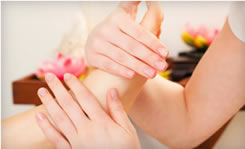
Qualify and test for the American Reflexology Certification Board, the highest standard of credentials in reflexology recognized through out the United States.
Level I Basic Reflexology
This course includes 2 hours on reflexology theory, history, zone therapy, meridians, map of reflexes and foot and hand structure. 1 hours of hands-on to learn reflexology grip and techniques. One hour on business ethics and standards. Twenty hours of unsupervised documented practical sessions.
Level II Reflexology and Aromatherapy
This course includes 2 hours of reflexology theory, history, zones, meridians, relaxation response, and body systems related to reflexology. Introduction to aromatherapy, its benefits, safety guidelines and practical applications will be discussed. 1 hour of practical sessions including the application of essential oils on reflex points. One hour on business standards, local/state laws and ordinances pertaining to the practice of reflexology.
Level III Reflexology and Hot Stones
This course includes four hours of body systems as related to reflexology, leg and foot structure, hands-on palpations, and map of reflexes as they are anatomically reflected on the feet. Practical use of hot stones for reflexology is discussed and practical sessions for four hours. One hour of business standards and ethics pertaining to the practice of reflexology.
Level IV Reflexology Clinical
Required for Certification with the *ANHA
This fully hands-on class is to satisfy the requirements of six documented practical sessions required by *ANHA for certification. The student may schedule 3 clients for the day. The student may invite friends and/or family to be their client or the institute can schedule the clients for the class.
 NCBTMB Approved Provider
*American Naturopathic and Holistic Association is a peer reviewed organization for professional health care practitioners and natural health care training institutions.
The American Reflexology Certification Board is a non-profit corporation, an independent testing agency whose primary purpose is to certify the competency of those Reflexologist who practice on a professional level and wish to be recognized as meeting national standards. Certification by ARCB distinguishes the professional; setting apart and bringing credibility to the practitioner committed to excellence.
7 CE units/each level
National Reflexology Requirements
American Reflexology Certification Board (ARCB)
110 hours required to qualify to sit for the ARCB certification exam
Curriculum for ARCB qualification
Holistic Health Care Level 1
Anatomy/Physiology and Medical Terminology 8 hrs
Holistic Health Care Level 2
Pathology and Detoxification 8 hrs
Reflexology Level 1
History, Principles, Benefits and Techniques 8 hrs
Written research paper on contraindications
of reflexology or studies on benefits of reflexology
(Independent study). 21 hrs
Reflexology Level 2 – Techniques and Aromatherapy 8 hrs
Written business plan (Independent Study). 16 hrs
Reflexology Level 3
Techniques and Hot Stones 8 hrs
Reflexology Level 4
Clinical and final practical exam for ANHA certification 8 hrs
Requires a written case study on five sessions
on five individuals (Independent Study). 25 hrs
_____________
Total hours 110 hours
Independent Study must be completed to meet ARCB requirements.
The American Reflexology Certification Board is a non-profit corporation, an independent testing agency whose primary purpose is to certify the competency of those Reflexologist who practice on a professional level and wish to be recognized as meeting national standards. Certification by ARCB distinguishes the professional; setting apart and bringing credibility to the practitioner committed to excellence.
Reflexology for Couples, level 1
(Introductory)
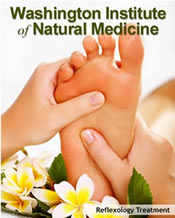
Reflexology is a time-honored method of alleviating stress
Reflexologists enlighten couples with information on acupressure techniques used in the hands and feet before leading to a 1 hour of hands-on demonstrations. In this cours the student will learn how to stimulate and balance organ systems by learning the mapping of the feet and hands.
Under the tutelage of certified reflexologists partners will settle into a 1 and ½ hour crash course covering reflexolgy techniques and sleight of hand in a small group of like-minded pairs. Make tension disappear with knowledge of pressure points in the hands and feet. Students spend the first 30 minutes ingesting information as a group before putting their lessons into practice during 1 hour hands-on demonstration and practice. Instructors work with each couple to guide them through the finer points of hand and foot therapy in a relaxed carefree way.
Contact Hours: 1.5
Touch Therapy/Reiki
Level 1: Learn about hands-on healing and caring for those with a variety of disorders through touch. Become aquainted with the history of healing, Reiki, subo points and how you can use this knowledge to care for others. This class will instruct students in the full treatment process. They will learn how to give a complete touch therapy session.
Contact Hours: 4
Practice Hours: 5
Level 2: A variety of styles of energy healing techniques will be presented in this class. Learn about sending energy through the Chinese meridian systems.
Contact Hours: 4
Practice Hours: 5
Level 3: Additional healing techniques and instructor training will be presented in this class. Students will receive further training in the healing arts.
Contact Hours: 4
Practice Hours: 5
Wellness Coaching Program
Anatomy and Medical Terminology
Wellness Coaching Level I
Two-day class includes developing skills on client assessment, coaching skills and interviewing skills. Student will receive checklist and client intake forms.
Wellness Coaching Level II
Two-day class includes experiential case study, role-play and clinical work with four clients. Additional subjects covered: appropriate language for non licensed practitioners, and terminology necessary when not permitted to diagnose a physical or mental condition.
Stress Management
Two-day class includes discussion and practical experience of exercises you can recommend to clients. Discussion of body work and other techniques that are useful for stress management.
Meditation and Visualization
Students will experience meditation and visualization sessions. Role play to help the student learn to conduct meditation and visualization sessions. Aromatherapy and music is part of the experience.
Professional Practice and Ethics
The following subjects covered are: professional conduct, legal practice, client confidentiality, advertising, informed consent and client intake forms.
Holistic Nutrition II, III & IV
Aromatherapy I & III
Continuing Education Certificates of Completion offered in Maryland
The Maryland Higher Education Commission has determined that the Washington Institute of Natural Medicine is exempt from MHEC approval authority.
District of Columbia classes are taught as Coaching Services/Prep Classes, Continuing Education, and Personal Growth and Development Programs
Educational and Employment Services Licensed, Washington, D.C.